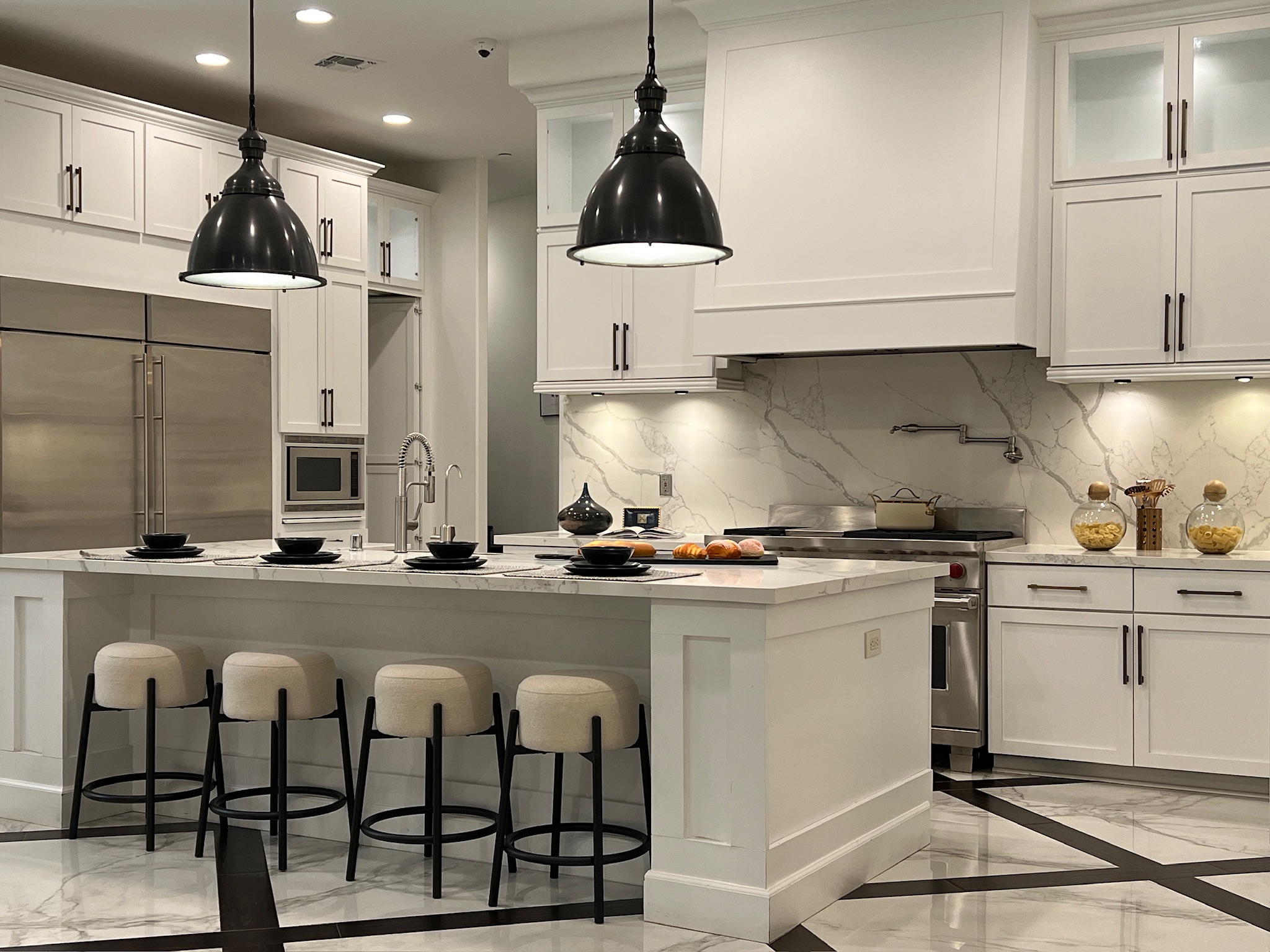
Why Is Staging Important For Estate Homes?
The sheer size of estate homes can actually work against them. A 20-foot ceiling and an open great room look impressive, but without furniture the space can feel cold. Staging solves this by anchoring rooms. A dining room with a long table looks ready for family holidays. A sitting area arranged around a fireplace feels like a gathering point instead of just a void. Buyers stop focusing on the emptiness and start imagining their lives unfolding there.
How Does Staging An Estate Home Differ From Smaller Homes?
With estate properties, the scale is different, and so are the expectations. A small sofa that might work in a townhouse would look lost in a grand room. Furniture needs to be scaled to match the architecture. Materials matter too. A sleek, modern estate calls for different finishes than a Tuscan-inspired one in Anthem. The goal isn’t to cover every inch, but to strike the right balance impressive, but still livable.
What Areas Should Always Be Staged?
Not every single room carries equal weight. But certain spaces are non-negotiable.
- The entry, because it sets the mood the second buyers walk in.
- Main living and dining spaces, since they showcase scale and flow.
- The kitchen, which often sells the house on its own.
- The primary suite, staged as a retreat instead of just a bedroom.
- Outdoor living areas, especially in Las Vegas where year-round use is a selling point.
Can Staging Help Older Estate Homes?
Yes, and often more than owners expect. A home with great bones but outdated finishes can feel stuck in another era. Staging introduces neutral palettes, modern textures, and clean lines that pull attention back to what matters the space itself. Instead of noticing tile that feels dated, buyers notice the soaring ceiling. Instead of calling a kitchen “old,” they see themselves entertaining because the space is staged with energy. The right design helps buyers look past what they might otherwise call flaws.
How Long Does It Take To Stage An Estate Home?
Larger homes naturally take more planning and setup than smaller properties, but the process is efficient. Most estate homes can be staged in under a week. The team works through every level, every main space, sometimes even the outdoor areas. Once finished, the home not only shows better in person but also photographs in a way that makes online listings stand out immediately.